This 2022 project came about as a concept album to accompany a book of poetry and visual art. The idea was to show the potential of what we easily abandon and write off. Each spread consisted of four elements:
- The raw material (junk) is pictured in its unnatural habitat (on the street, at the beach, in the forest)
- an accompanying poem was commissioned or composed
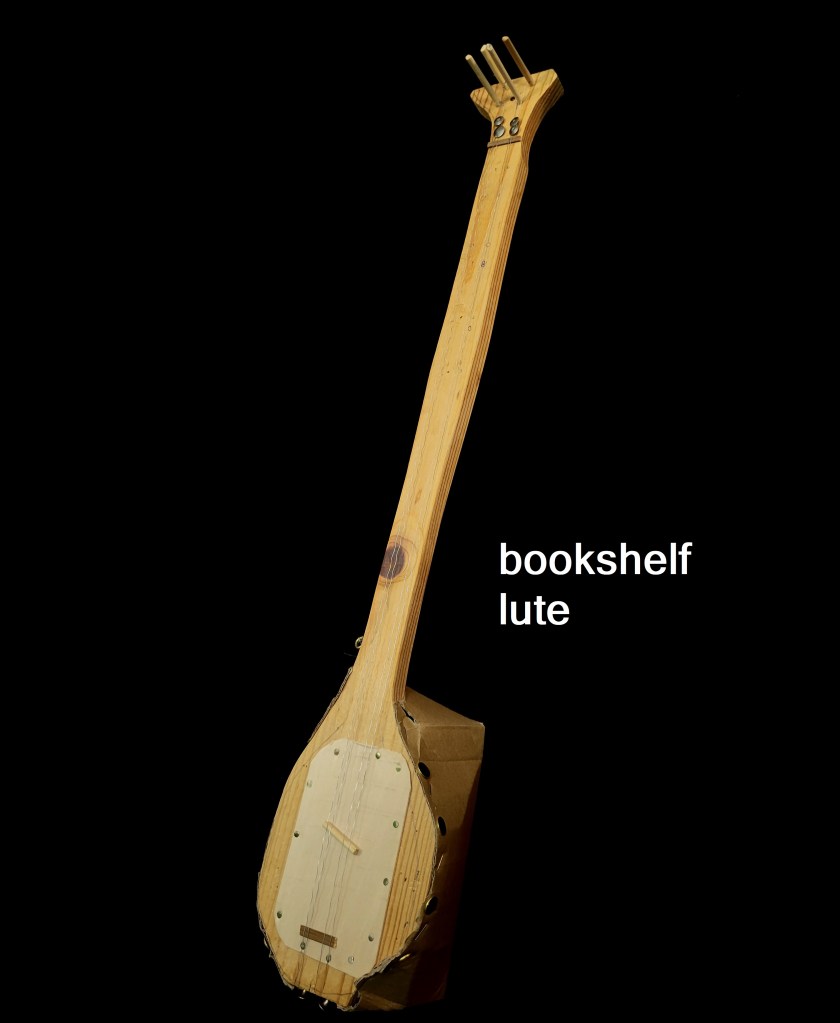
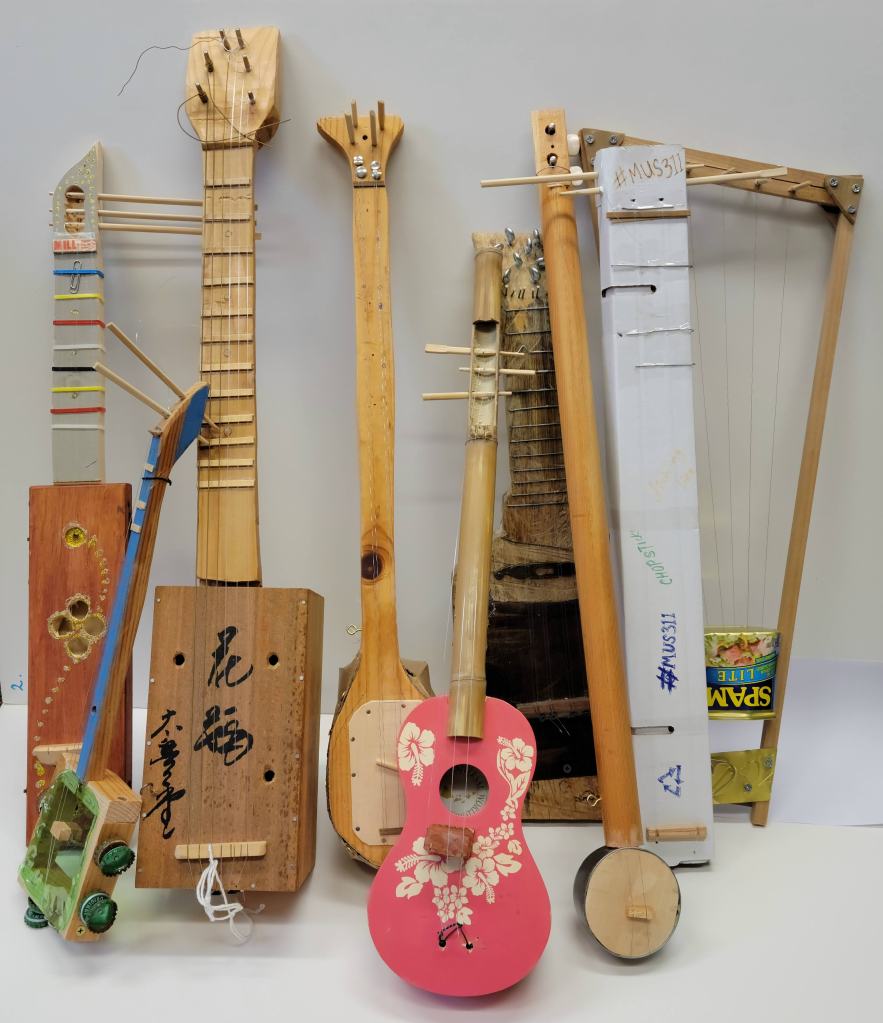
- the salvaged item was turned into a functional instrument
- a song was written and recorded using only these home-made instrument(s).

Pictured: Feral cat food tins and fishing line turned into bowed instrument.
Or access the album wherever you get your streaming music, including:




Liner notes for the White Album:
Voyager
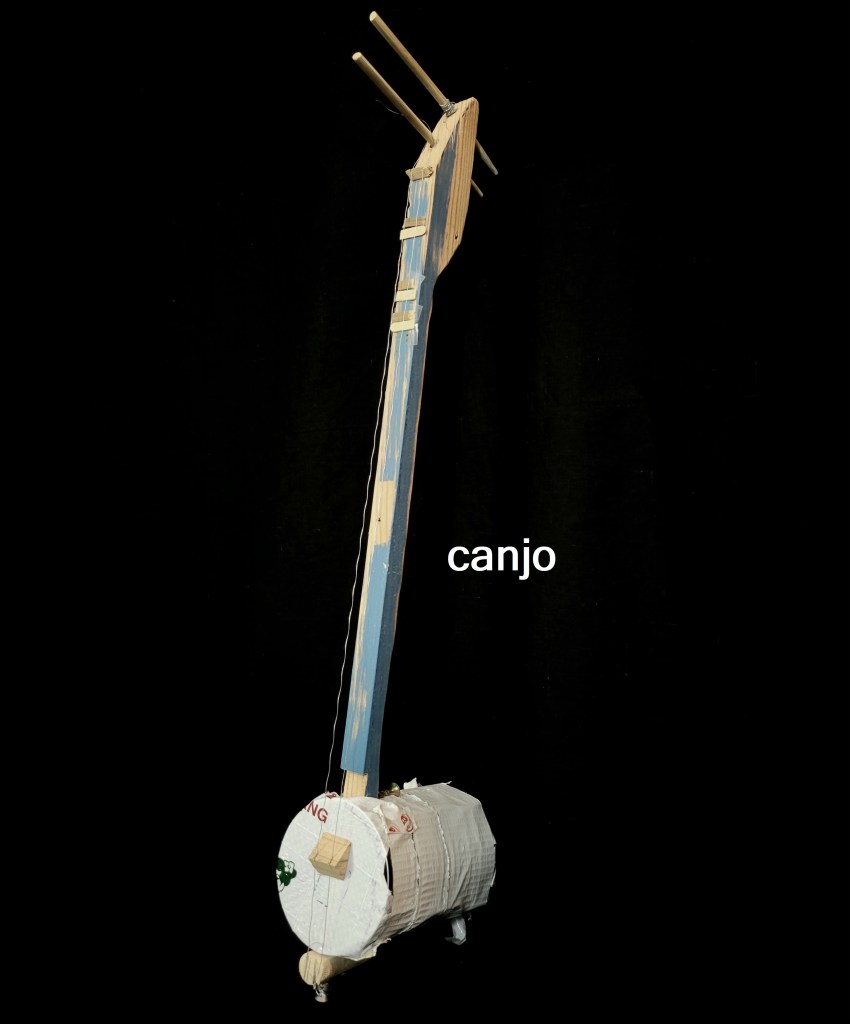
Inspired by a tin can my son and I found during a trash cleanup event, this is the song that launched this project. It also connected my eldest son’s latest voyage (starting kindergarten) to the music we sang together nightly. Most of the songs on this album, no matter their origination, actually became lullabies we worked on together (so they are kid-approved). The text of this one is inspired by wayfinding techniques used by the Hōkūleʻa crew–how nature provides orientation if we pay attention.
Gone
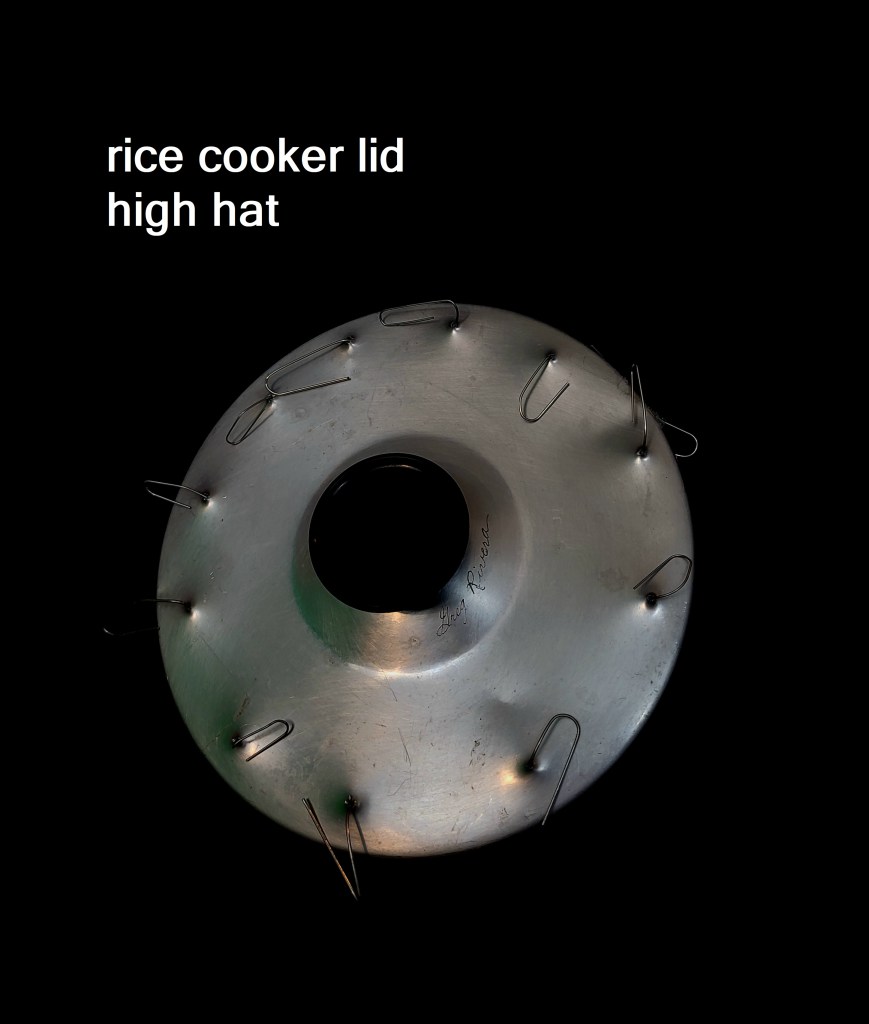
During our “not serious” gap year between coming home from the Peace Corps and opting for grad school, we lived in a termite-ridden cottage three blocks from Waikiki beach, baked a lot, grew tomatoes, did some woodworking, and surfed before and after work daily. When I would close my eyes to go to sleep at night, my mind would replay images of the rise and fall of the ocean. It was a year with no trajectory, and necessarily so, and it had to come to an end. This song came to me while floating on a longboard and watching for the green flash at sunset over Canoes between overcrowded sets. The year was rejuvenating, healing, and lovely, but it was time to move forward, transition again, and to make a plan.
Kwa Thaw Cha
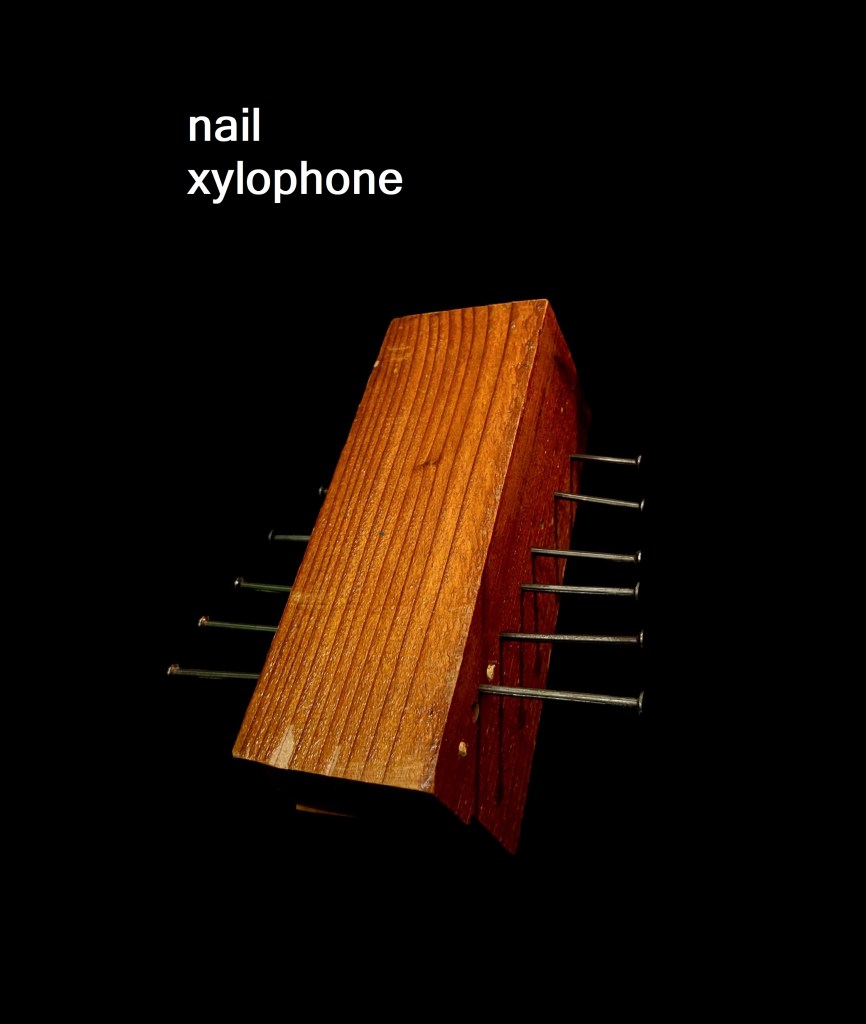
I first encountered this song as a Karen (pgaz ‘nyau) song by the late great tehnaku artist Tue Pho from Omkoi (where we served in the Peace Corps). Roughly translated, it is a song about staring at the full moon and longing for someone who has gone away. Years later it was pointed out to me that Tue Pho had based his Karen version on a famous Thai song (Duean Phen) with lyrics alluding to a famous poet’s political exile to Laos and later France. My instrumental arrangement here seeks to capture some of these feelings of nostalgic longing, liminal drudgery, and plodding contemplation… with the added challenge of using just the one nail-o-phone instrument. This audio thus features struck and bowed nails (and a Thai ching percussion instrument as a nod to the melody’s geographic origins).
The World is Round
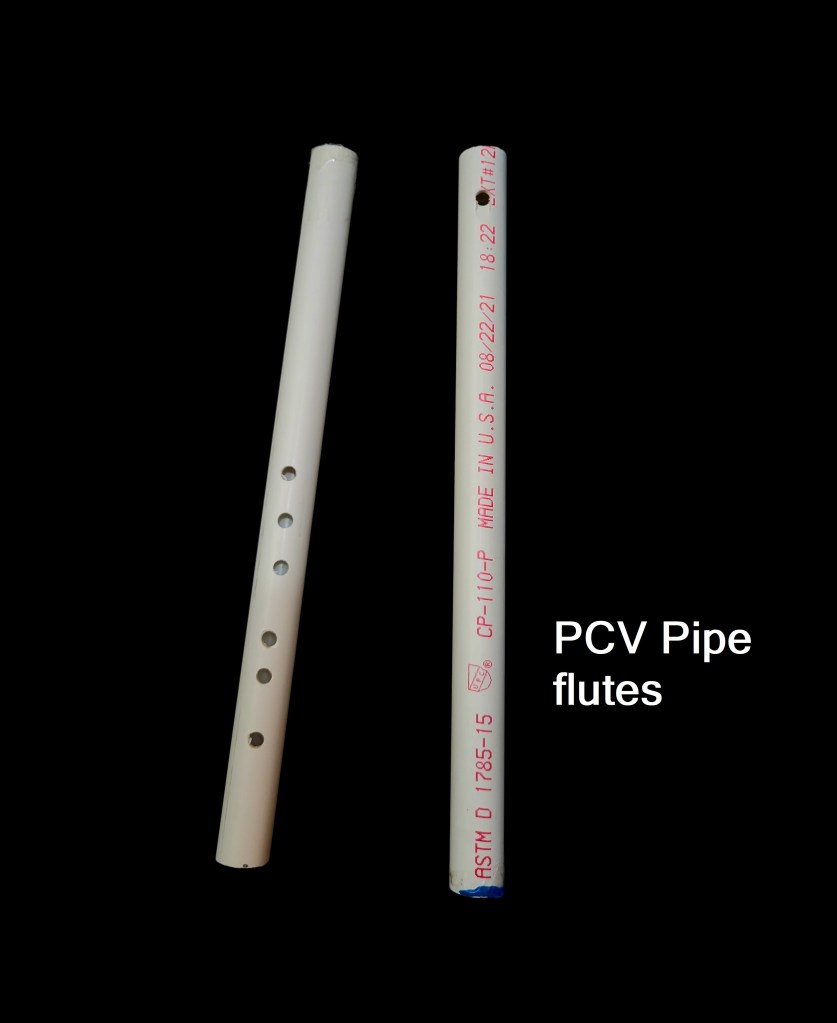
I remember feeling stood up in Thailand–sitting alone (pre-smart phone) in a conference room waiting for an audience that never showed. I mentioned my meeting plans to a coworker later: “But we had scheduled a meeting for Tuesday at 10am!” They offered that, well, there would be a 10am tomorrow, and the day after that. Or there would be another Tuesday next week, or the week after. Or the next life even! I remember the recurring issues and utter frustrations I felt due to my linear, one-shot view of time clashing with a cultural worldview rooted in cycles and renewal. This prompted the imagery of a Little Prince type of round little world and a bratty teenager wanting to show his parents just how far away from them he can run. But, with the world being round, there comes a point where one’s “away” becomes a reentry back toward the source. Letting that exploration happen is a leap of faith and a tough lesson in grace (and one that I need to continually relearn as I drift so swiftly back toward linear tendencies). As I revisit the lyrics years later, I find traces of my sons already there– their love for the starry night sky, playing on a sandy beach, and just being kids–and I start to recognize my own life as in a current stage of a larger cyclical form.
Keep Singing
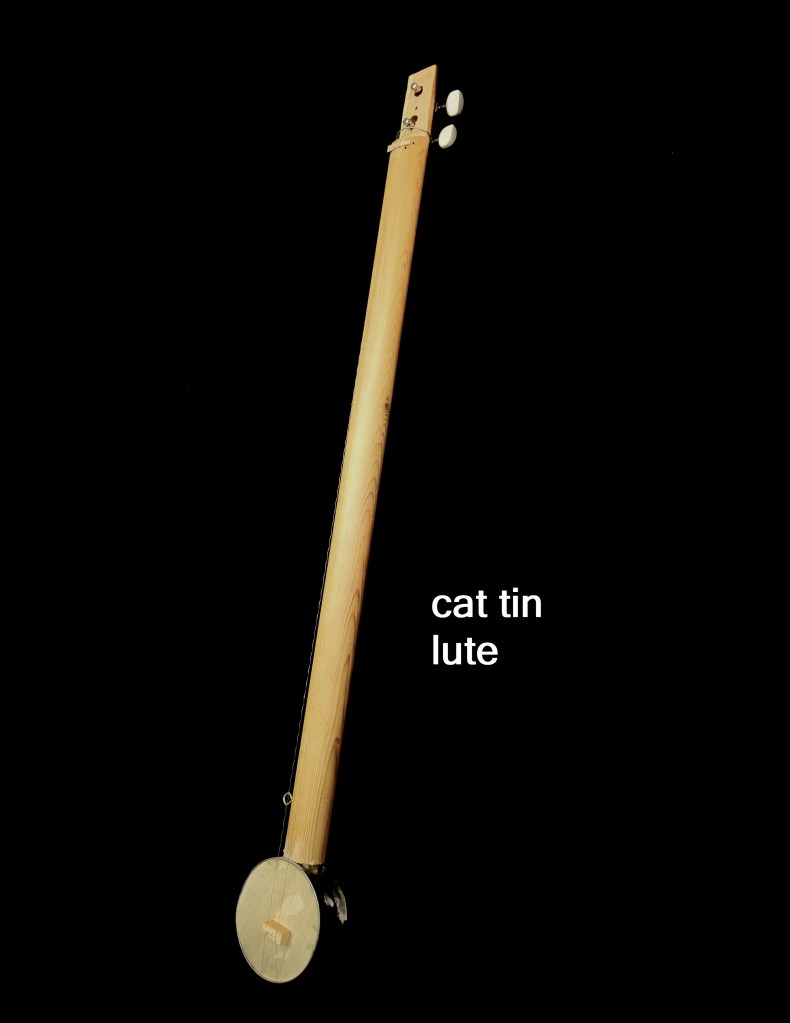
Adapted from American preacher Robert Lowry (c.a. 1869), “How can I keep from Singing” is a hymn especially beloved by American Quaker communities that celebrates the beauty, power, and comfort of nature as something pointing to acceptance by the divine. My slight lyrical adjustments here aim to turn the song into a more down-to-earth introspective lament, a call to observe the beauty and fragility of this planet, and to acknowledge our responsibility to it. Thus, the slight rewrite of “that Rock” (spiritual grounding) to “this rock” (a wobbly sphere spinning through the cosmos) seeks to align with what astronauts (including, most recently, William Shatner) experienced as “the overview effect.” This psychological perspective is something a human gains when viewing the life-sustaining planet from space and results in a profound sadness, where life (the fragile earth and atmosphere) and death (vast and empty space) are so starkly and strikingly juxtaposed, and the destruction levied upon the earth by humanity (in the name of nationalism, economic progress, religious dogma, greed, convenience, or any other misguided campaign) becomes increasingly obvious as being both manufactured and idiotic. Add to this our own powerlessness, and what is left? What course of action can we take? Just keep singing our fading hymns and songs? This is why I visually accompanied the song with a poem referring to Nero’s fiddling; It was also at this point in the project that I realized I needed to include some happier songs (e.g., “I’m so Glad”) that express gratitude for our fragile existence.
Kaho‘olawe
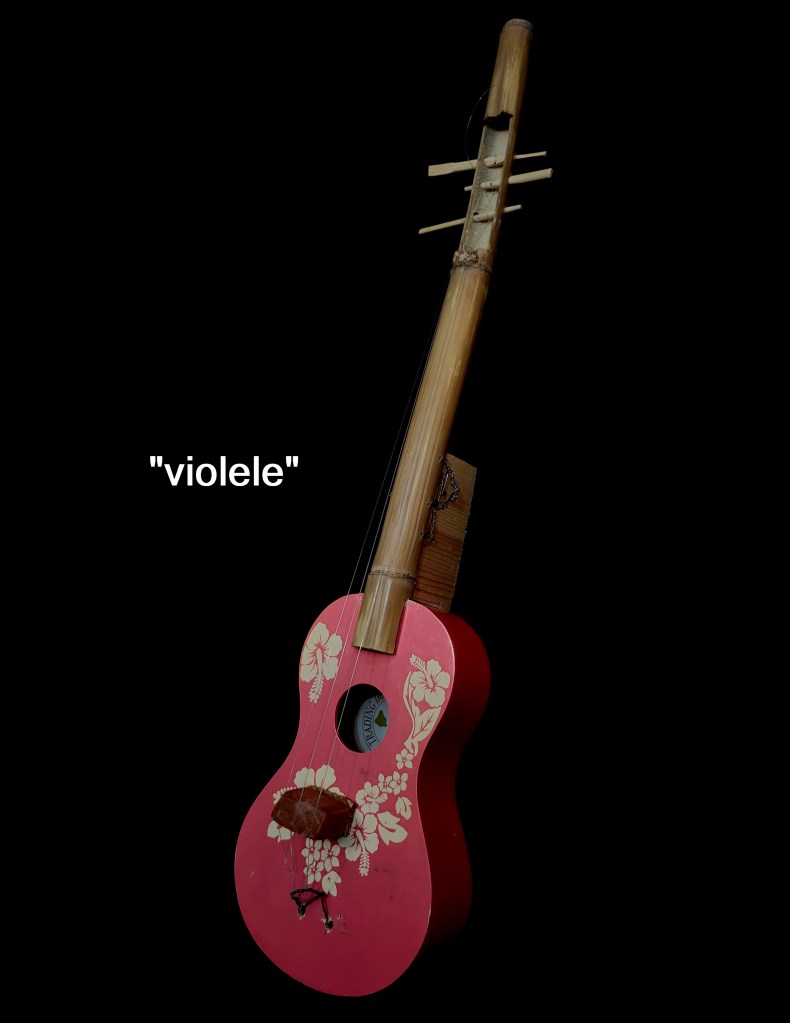
My first job in Honolulu was with Americorps/US Vets. I conducted outreach around the island to homeless veterans and was connected to IHS, which later hired me in their fundraising office. I worked there with databases and mailing lists, and one year we tried a mail solicitation to local businesses in the downtown neighborhoods near the shelter. One of the response forms came back anonymously with a handwritten note that read, “I’ll give IHS money if you use it to ship them all to Kaho‘olawe. Get rid of those bums!” We had just come back from a volunteer trip to Kalaupapa, where the last surviving Hansen’s Disease patients still resided, images of exile fresh in my mind. The idea that there is an “away” that we can send people, or things, to, is an unfortunately persistent and utterly false trope. Exile and scapegoating are convenient actions in that they prevent us from self-examination, from dealing with systemic issues, and from constructive, compassionate, and collective action.
Tea
There’s always time for boba, always time to stop, sit, breathe, and drink. Bubble tea has been the one constant in our lives that has kept us grounded through many difficulties and transitions (especially but not just during the covid-19 pandemic). This song is my attempt at a post-national drinking song dedicated to boba. I wrote it before I learned about a whole corpus of songs from China tracing back to the imperial-era guqin piece yangguan san die, which portrays two friends sharing a pot of tea before one of them is to leave for the land of the barbarians. The remaining friend begs the other (over three variations) to just have one more cup, or to not even go at all. I meant for my lyrics to have a similar plea for now-ness, calm, and trust in an elder’s recommendation to practice patience.
Mu Hao Jao Nuea
In 2014 I was awarded a modest arts & humanities research grant and spent a few months in Chiang Mai learning salaw-saw-sueng music with Ajaan Tom Sareeyoth Na Savipornwusahim at Wat Suan Dawk near Chiang Mai University. From the outset, he insisted that I commit to memory two key traditional songs that underpinned much of the Lanna (northern Thai) canon and that every northerner knew. The first was Long Mae Ping, a standard folk tune by Jaran Manophet (the “Bob Dylan of Chiang Mai”); the other was this unofficial Lanna national anthem, Mu Hao Jao Nuea. Ajaan Tom swore that no matter which part of the north I traveled through, everyone I met would know these two songs, and knowing them would lend me instant rapport as part of the extended mu hao community. I present this song not under the guise that I have or ever can arrive at something akin to an insider there; rather, I offer this as a show of respect and gratitude to my teachers and host families in Chiang Mai who lent me their time, wisdom, and patience and asked that I share with others the hospitality and lessons they shared with me.
The End
We spent over two years in Thailand building some intense and deeply meaningful connections with people and place, all the while knowing there was a clearly defined end date. Yet even with all the preparatory pomp and circumstantial ceremonies, the goodbye still seemed surprising, hasty, and unjustly insufficient. This song was written on the plane flying home, where we were seated with and helped to translate announcements from English to Thai to Karen for some 50 refugees from Burma headed to Minnesota in mid-February. The flight attendants kept offering drink options of “coffee, tea, or water,” (the Sgaw Karen word for ‘water’ is hti, pronounced pretty much the same as ‘tea’, which caused much confusion).
Goodnight
My first album written in Hawai‘i was a collection of children’s songs I conjured up while doing Raiser’s Edge data entry in a windowless office at IHS (the institute for human services). The album had some catchy, silly songs (e.g., “Don’t Eat Donuts”, “It’s Men Who Try to Run the Universe”) that the nieces and nephews got a kick out of, but this closing song (inspired by Randy Newman’s cowboy lullaby from Three Amigos) was one I held onto and imagined I’d sing to my own children someday in the future. I was newly impassioned about environmental issues after spending a summer teaching English in polluted rural China and wanted a song that would encourage my hypothetical children to pay attention to nature… but without being too crunchy or awkwardly trying to wax poetic about recycling.
Tuva
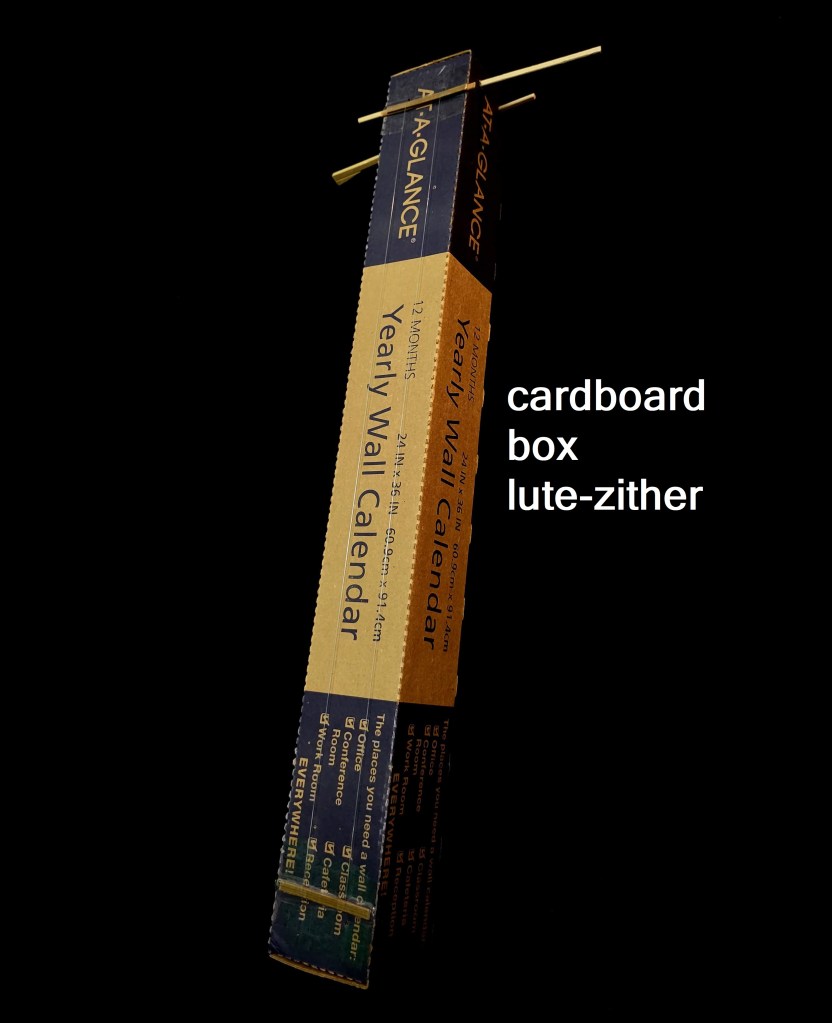
In the summer of 2002 I worked at a summer camp in Santa Cruz. Venus and Jupiter remained side by side for the entire summer, as did I with the girl I met there who one day I would marry. I worked various jobs at the camp, but it was my stint as a runner picking up wholesale food deliveries for the kitchen that would give me ample time to listen to local radio broadcasts run by UC Santa Cruz students. One of these programs featured a Tuvan rock band and a throatsinging tutorial. I remember sitting in the truck, mesmerized by the sounds coming from the speakers, letting ice cream melt in the back and wanting so badly to listen till the end of the program (I think NPR dubs this feeling a “driveway moment”). I can’t remember the name of the band or the exact tune, but I remember this moment as one of those turning points where I came to grasp that humanity was infinitely vast and harbored so much worth knowing, appreciating, and learning if one could just be willing to venture out. This song is a faded recollection of the galloping-horse-inspired music that inspired me that day.
The Billionaire

It’s rare that Lisa listens to one of my songs, approves, and wants/ offers to sing it. I am so thrilled to have her voice included in this collection. This song’s evolution also starts with her: in 2011 she bought me a book for Christmas (The Ultimate Guide to Making Foot-Stompin’ Good Instruments by Mike Orr), and we hit up a thrift store in Olympia, Washington shortly thereafter, where I bought a cookie tin and other supplies for my first canjo. I didn’t really have any lyrics in mind then but started with a pun (“Just because I can”) and let it go from there. The result was a generalized wealthy and privileged character and his entitlements and expectations of his inferiors, which apparently is a timeless enough theme with multiple potential applications. Honestly, I had no specific billionaire in mind when I penned these lyrics.
Nothing Wrong

One day during my sulky junior high school days I was inspired to write a song that had the tagline “there is nothing wrong with you.” It was a message I imagined and hoped someone would affirm with me (other than my parents! Don’t worry, Mom!). But it just never went any further than the single line of text (and a really cool chord progression I could play for hours in the basement on my flying-V electric guitar). 25 years later I revisited the lyrics after someone close to me began the process of a bitter divorce, cruel custody battle, and financial devastation. Through it all, they were able to find moments of solace that usually emerged unexpectedly and when immersed in and open to the grace and beauty of nature. There is no better path to peace, no better sanctuary.
Mermaids

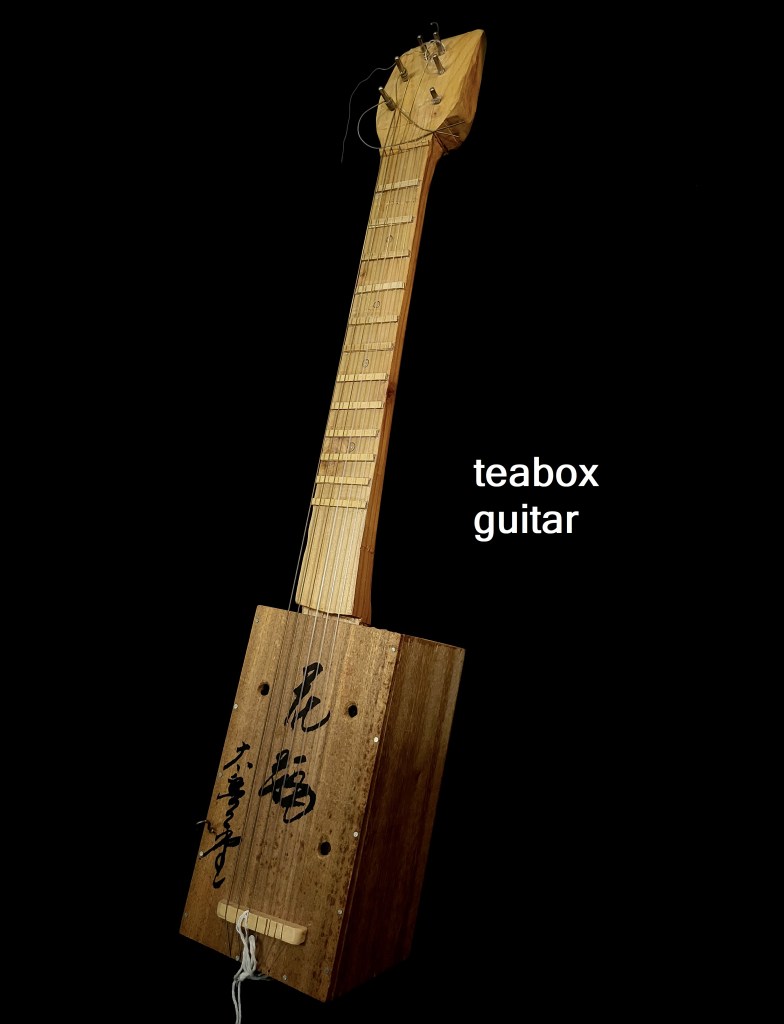
My 6-year-old son has been getting into Minecraft lately and asked me to compose a song that sounds like game music. This contemplative pentatonic piece was my response (he said it was OK, but he’d rather have piano, which I can’t build). This recording features a tea box zither (inspired by the koto), a 2-stringed zither made of cardboard and fishing line, a stainless steel water bottle (used as a gong), and a boba straw slide whistle (the sliding pitch effect achieved by immersing the flute end in a cup of water and moving it up and down). I imagined it as a tea ceremony meditation by a koi pond, but Lisa heard and pictured deep sea whales (hence the title name).
Harpers
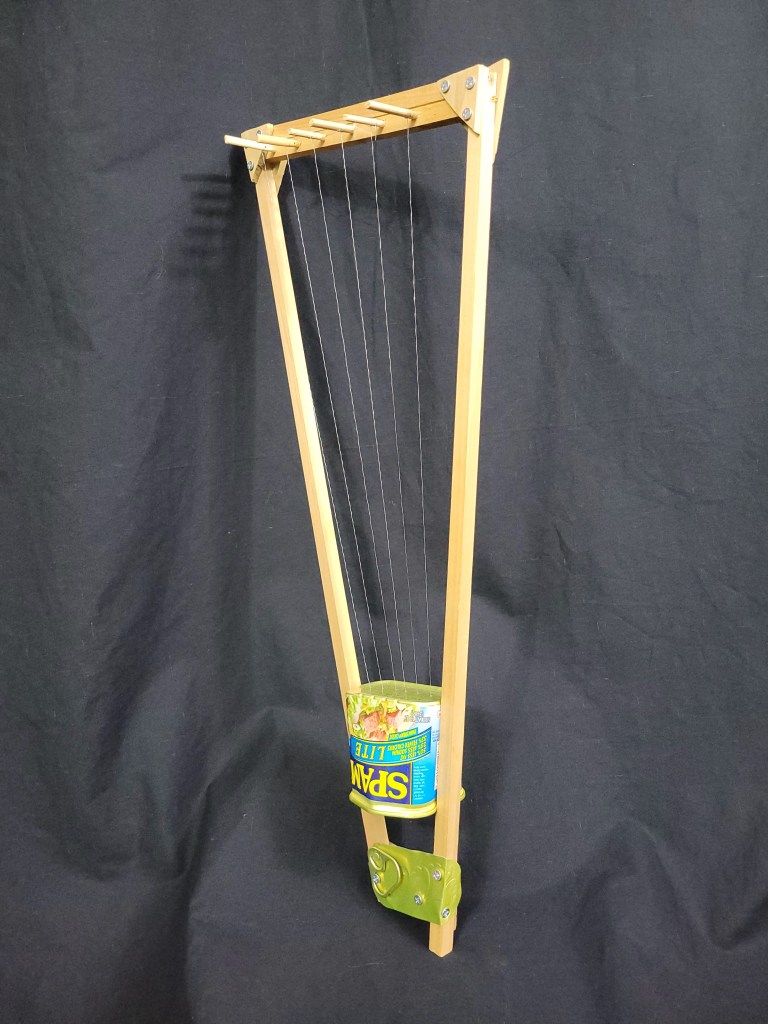
This song was a challenge issued to me by colleagues I was working with in Thailand in an academic capacity (they were all musicians, activists, cultural practitioners, and they thought it was odd that I no longer seemed to be writing my own music now that I was” just studying” it). I wasn’t really sure myself what I was allowed to do as an academic–ethnographic participant-observation blurs the line between researcher, performer, and advocate, and while I enjoyed learning the music of others, I wasn’t sure if I was allowed to create my own materials that drew significantly from these other traditions that I found so inspiring. My colleague, Chi Suwichan Phatthanaphraiwan, pointed out to me that he wanted my input, my collaboration, and my voice as part of his indigenous framing (“our name, pgazk’nyau, means “human being,” and if you elevate me and silence yourself, that’s disrupting the egalitarian values my people and performances seek to embody). So, humbly, this song features my home-made tehnaku harp with a nod to Americana roots music as well as, more importantly, the resilience of the Karen people, their ecological practices, and their continued struggle for unity and autonomy in what has become the world’s longest-running civil war (at the time of this song’s composition, 70 years).
Time
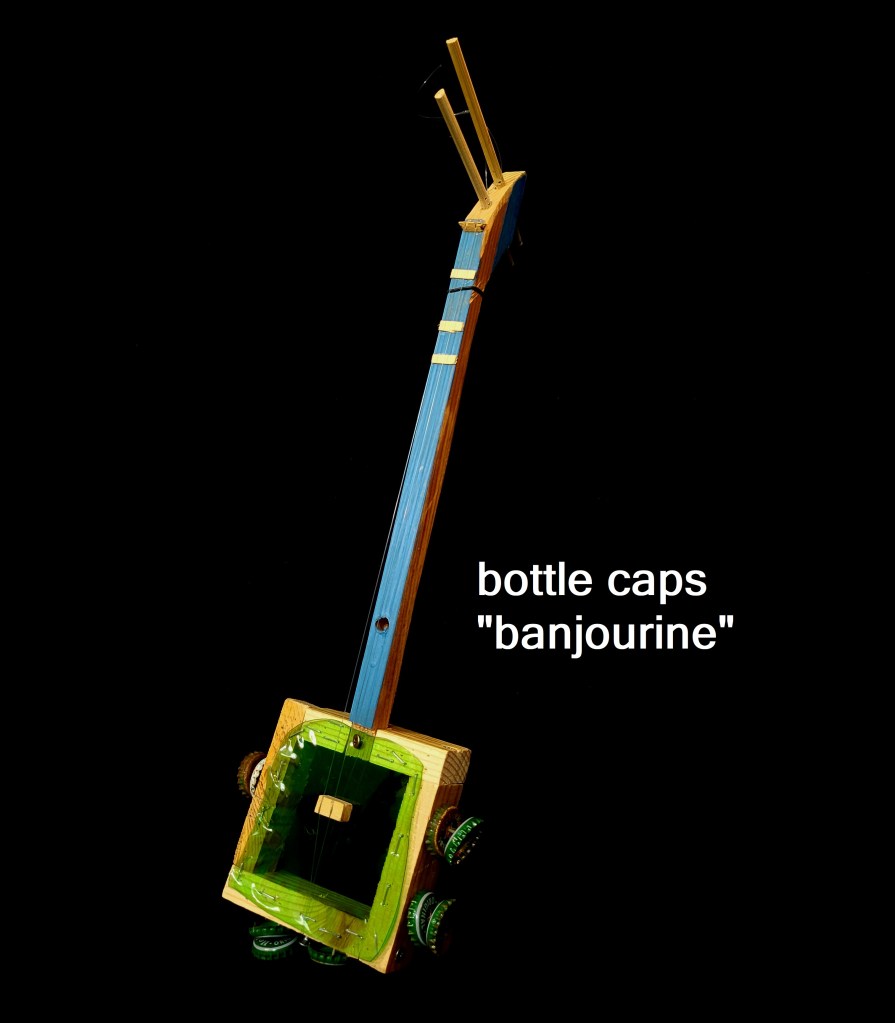
This was a song written as I neared an age milestone (ending in -0) and felt newly qualified to look back on my youthful naiveté with increasingly cynical eyes. But it could have just as easily been a song about unrequited young love, or my memories of factory pollution (soot storms) in Shijiazhuang compared to the lush greenery of the mountains of Chengde, or the rise and fall of my eco-optimism after witnessing the national movement following Al Gore’s surprise hit An Inconvenient Truth, or the vitriol of American political rhetoric in the 2020s. It seems that lessons of the past, prophets in their various incarnations, and social movements come in ebbs and flows, or jetsams and flotsams. Collective movement and moral arcs can and do move the needle, but, as the saying goes, sometimes the more things change, the more they stay the same. This song sits with such instances of progression/regression and finds hope in the everyday acts of human kindness and cooperation that are, inspiringly, still happening around us.
Dawpuewae
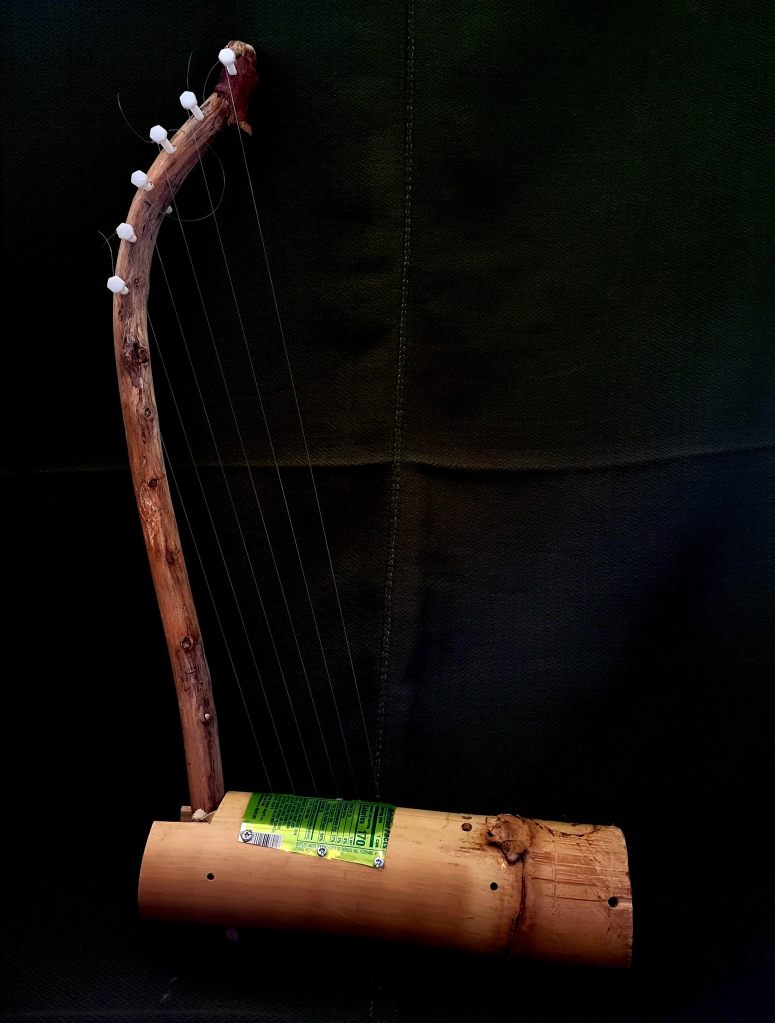
A significant portion of my graduate study in Ethnomusicology (and ongoing post-doc work) has been centered around the work of my good friend and colleague, Chi Suwichan Phatthanaphraiwan, arguably the most famous indigenous Karen (pgaz k’nyau) activist and musician of Thailand and among the global Karen diaspora. The Karen harp, called tehnaku, inspired some of my original forays into repurposing materials to musical ends (as untwisted bike brake cables are a staple of Karen, and northern Thai, musical instruments). This song is part of a larger curriculum project Chi and I are working on that showcases some of the lore and repertoire of the tehnaku and was recorded as part of Chi’s residency with the East-West Center Arts Program in April of 2022.
Hawai‘i Aloha
As a transplant to these islands, I first encountered this song at the close of the Memorial Day lantern floating event at Ala Moana, where the entire beach crowd burst into this spontaneously at the end of the night. I started noticing its organic recurrence at other venues thereafter. I knew I was witnessing something special about community life here, and I knew I wasn’t yet but wanted to be a part of that collective devotion to place. Committing the song to memory is a good starting point, I think. Years later, we brought some visitors to the Prince Lot Hula Festival at ‘Iolani Palace and witnessed an extraordinary conversion. The day started with the typical barrage of (slightly too loud) comments, questions, ‘discoveries,’ and assumptions expected of disoriented continentals (for whom Hawaiian hula was lumped together with Tahitian ōte’a); but the final halāu closed with this song, and while the keiki danced on stage and the kumu commanded from the side, “Show them, keiki! Share with them your love for this place!” our visitor turned and said to us, “I think I’m starting to understand.” And they started listening and observing more. They had always commented on “how lucky our kids were” to grow up by the beach, but something deeper was coming to their awareness in seeing this song performed as hula in front of the palace, not as commercial lu‘au entertainment but as an affirmation of the uniqueness of this ‘āina and Hawai‘i’s cultural values. The song became one of the staple lullabies we sang to our boys in their early years. We wanted, inspired by this kumu hula, to connect them to this place and instill in them a love for and responsibility to the people, mountains, rocks, birds, breezes, ocean, and every beautiful thing that enables their lives here, and for them to be able to reciprocate, to take care of it, to share it, to conduct themselves with respect, to listen and observe the lessons present all around us.
I’m So Glad
Lisa and I used to have a Christmas tradition of buying a random CD from a thrift store every time we drove from Tuolumne (my family) to San Luis Obispo (her family) for holiday road trips through California to play in our rental car. One year we picked up Jerry Lawson and The Persuasions’ On the Good Ship Lollipop, an a cappella gospel album for children. When I started teaching music at Ala Wai Elementary School, I drafted a few participatory lessons inspired by their rendition of “I’m so Glad (I’ve got skin)”. This studio recording is another few generations removed from the classroom activity, but the idea is to recapture some of the joy we felt moving together and contributing our own improvised verses (and instruments!)
 Kani ka ʻōpala: music made from Rubbish